Mathematical modeller and software developer.
Auckland Bioengineering Institute, University of Auckland
Modelling the role of STIM1 and STIM2 in oscillations in T-lymphocytes
Summary:
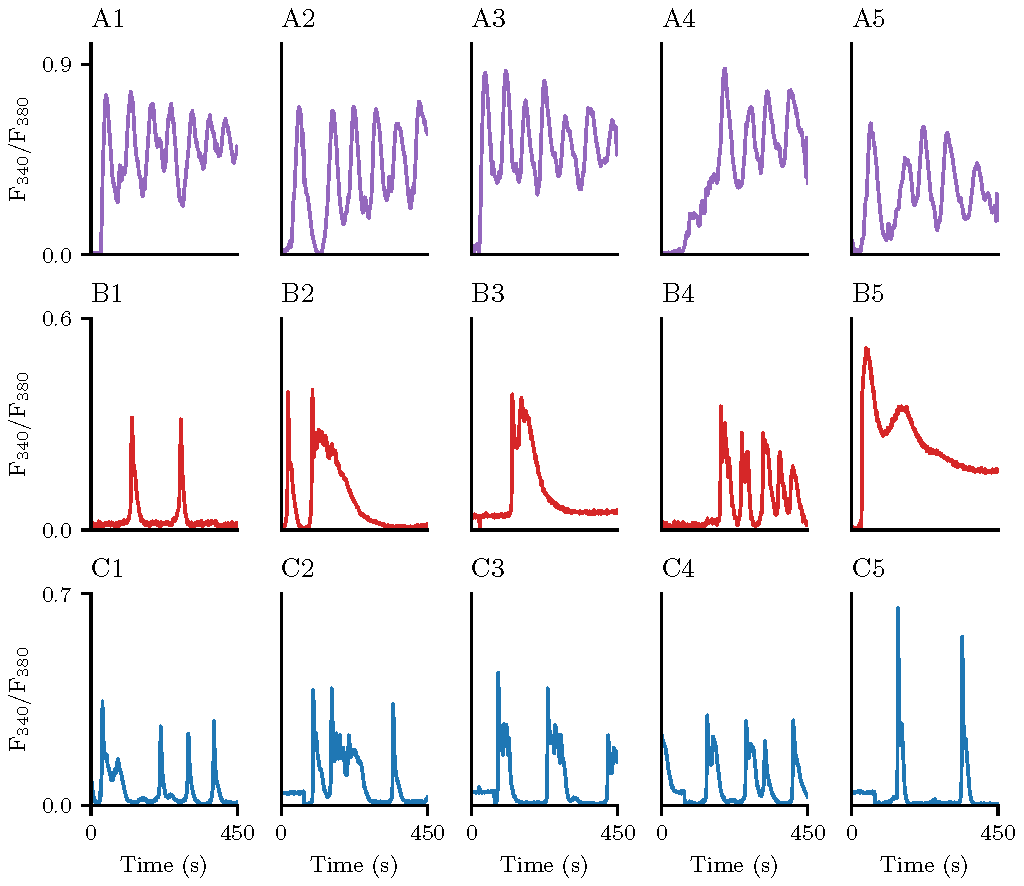
After successfully coming up with a hypothesis regarding the two oscillatory mechanisms seen in T-cells in our previous paper, there remained a very annoyingly difficult to answer question: “What was the role of STIM1 and STIM2 in this whole ordeal?” We knew that the external oscillatory mechanism (CRAC) relied on these two proteins to function. We also knew that oscillations in cells with both types of STIM (purple) have a sinusoidal shape, and that those with neither type (now shown here) consisted of spikes and bursts. To complicate things even more, cells without STIM2 (red) or STIM1 (blue) exhibited oscillations that sometimes had spikes, and sometimes had a Ca2+ ‘swell’(not a full sinusoidal wave, but almost).
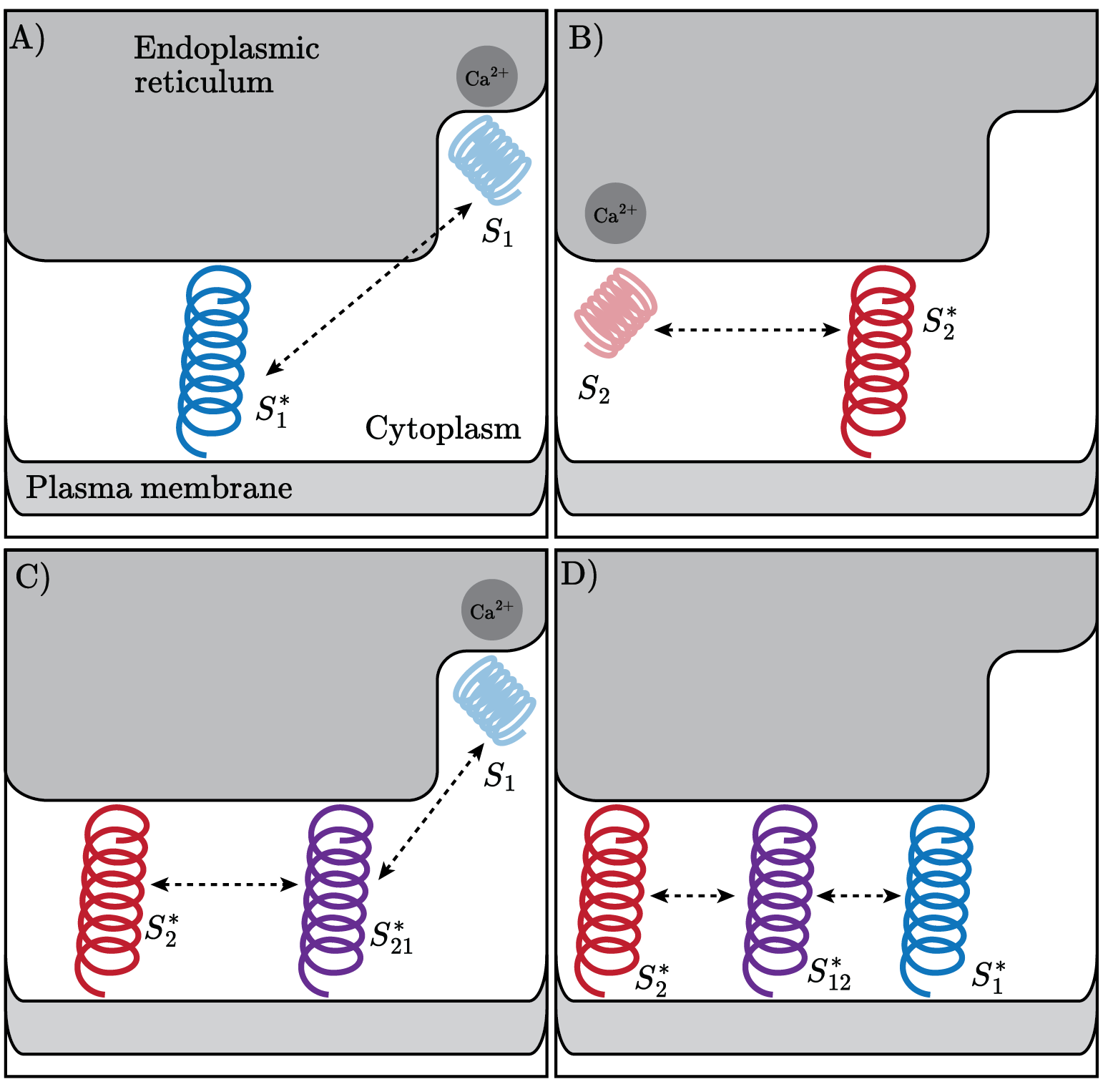
It was becoming obvious that in this intermediate stages, both mechanisms could cooperate to create a ‘mixed’ or ‘hybrid’ type of oscillation. But we still needed to show computational evidence, at least, that this was the case. So back to the drawing board we went and what we came up with a simple model of interaction between STIM1 (blue) and STIM2 (red), which is shown at the top of this page. In short, this model proposed that STIM1 and STIM2 can both enable Ca2+ influx, but when they are together they can cooperate to create a transport mechanism stronger than the sum of its parts (purple). This model not only allowed us to performed simulations where only one type of STIM is present, but it also gave us oscillations with both ‘spikes’ and ‘swells’.
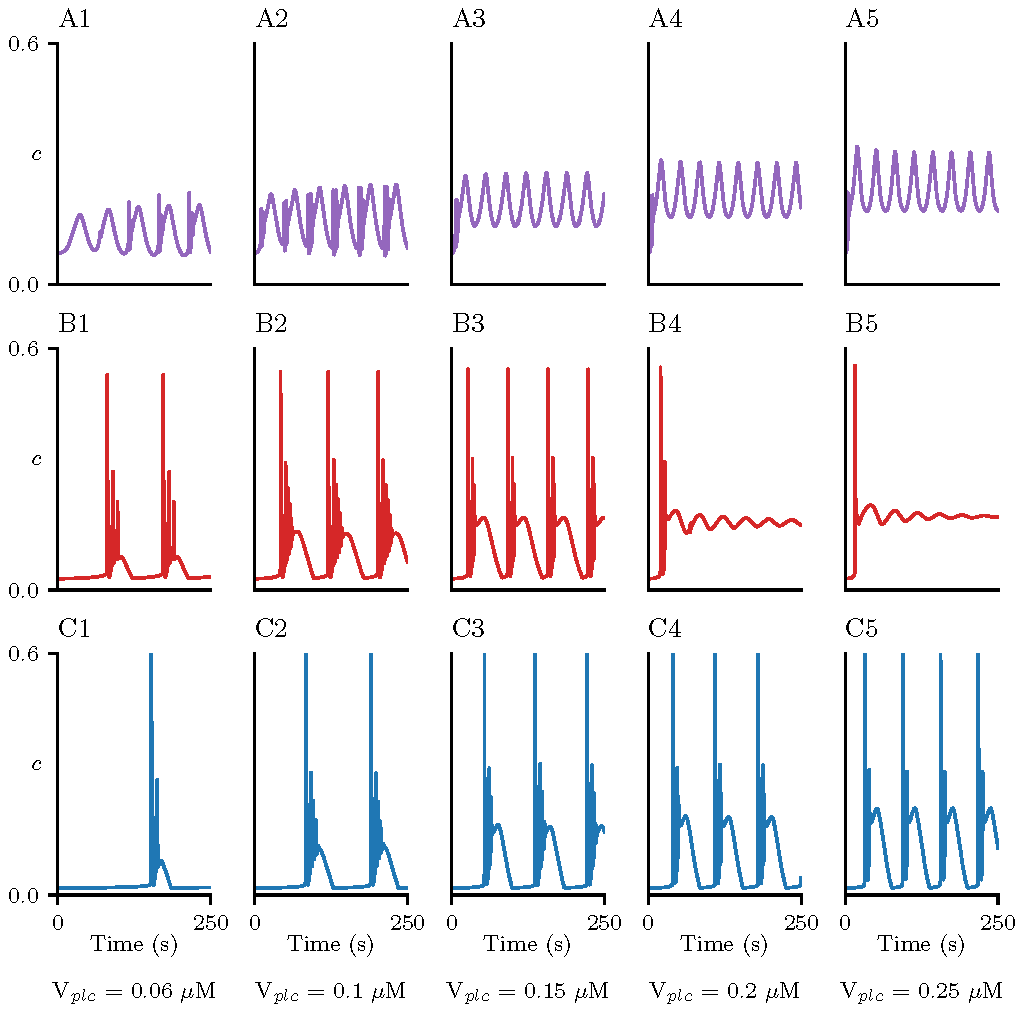
Which was pretty exciting! Problem solved, right? Well, we still needed to show that the hybrid oscillations were possible from a mathematical point of view (which would give us a better understanding of how the two mechanisms work together), but time became my greatest enemy and I had to finish my PhD studies before tackling that question. Perhaps one day…